
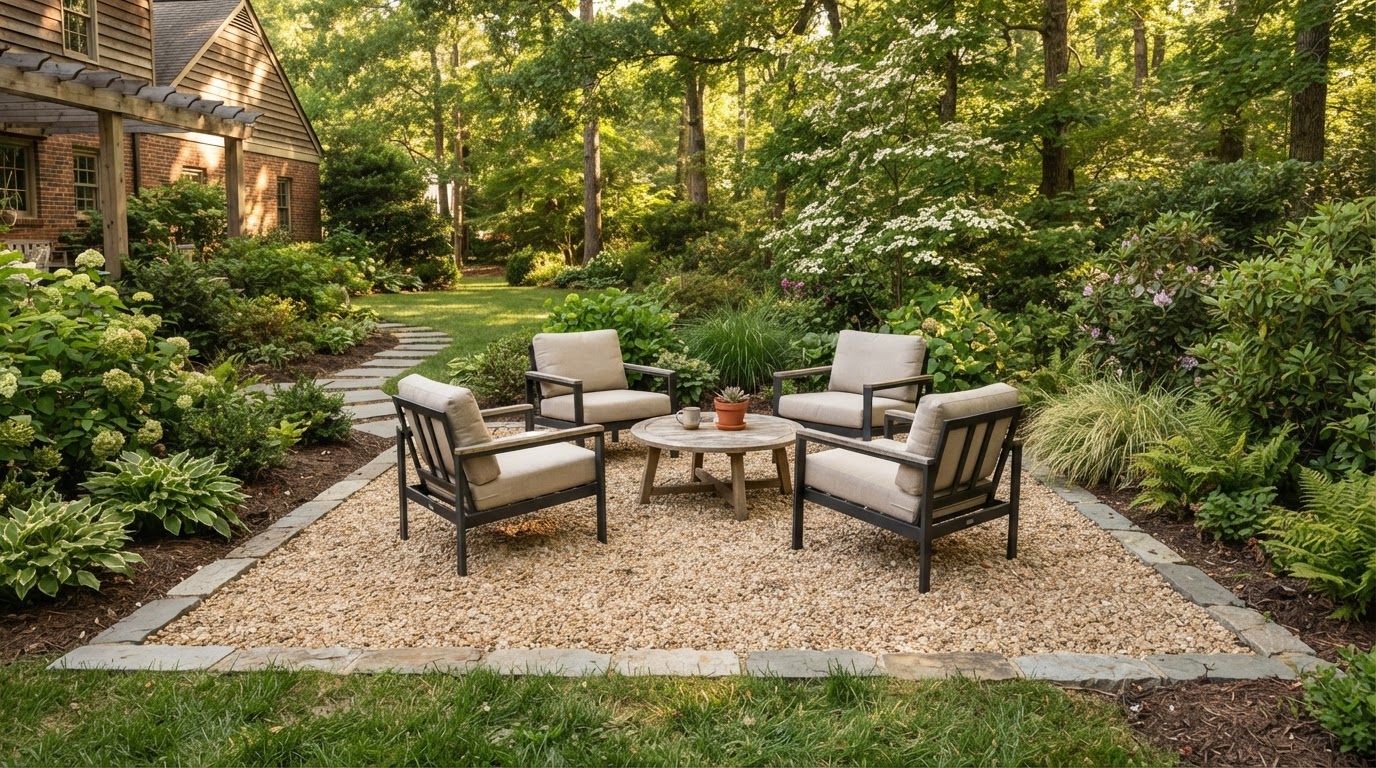
Gravel Patio & Walkway Installation in Hampton, VA
Gravel patio and walkway installation in Hampton, VA plans and installs loose-gravel surfaces for suitable outdoor uses, from a casual seating area to a garden path. Gravel offers a softer, more natural look than paved surfaces and can suit informal or budget-conscious projects when the use allows it. Request an Estimate to describe your space, or call 757-801-3219 to discuss it.
Discuss Your Gravel Surface
Tell us about the patio or walkway you are considering and how the space will be used.
Project Goals & When This Service Fits
Gravel Type & Intended Use
Gravel type and intended use are the starting points. A patio used for dining with furniture needs a gravel that locks together reasonably, like a crushed angular stone, so furniture does not sink. A decorative path can use a rounder pea gravel that is pleasant to walk on but less stable under furniture. The gravel is chosen against the use, because the wrong stone makes the surface frustrating or unusable for its purpose.
Containment & Edging
Containment and edging keep the gravel where it belongs. Without stable edging, gravel migrates into lawns, onto paths, and away from the patio, creating a constant cleanup problem. Edging, whether steel, stone, or timber, defines the area and holds the gravel in place. The edging is planned as part of the surface, not added as an afterthought, because containment is what makes a gravel area function over time.
Furniture Stability & Accessibility
Furniture stability and accessibility are honest considerations. Gravel is less stable than a solid surface for tables, chairs, and anyone with limited mobility, and it is not suitable for every accessibility need. Where stable footing is essential, a paved surface is the better choice. A gravel patio can work well for casual seating and informal use, and the recommendation reflects that rather than presenting gravel as equal to pavers in every situation.
Options, Materials & Scope
Base & Site Preparation
Base and site preparation matter even for a loose surface. The area is excavated, a geotextile fabric is typically laid to separate the gravel from the soil and slow weed growth, and a compacted base layer may be used beneath the decorative gravel. Without preparation, gravel sinks into soft soil, mixes with mud, and becomes uneven. The base is what keeps a gravel surface usable rather than a muddy mess after rain.
Drainage Conditions
Drainage conditions are assessed because gravel handles water differently than a solid surface. Gravel allows water to pass through, which can be useful in a wet area, but it does not solve an underlying drainage problem, and a poorly drained site can still leave the gravel saturated and soft. The drainage is considered so the surface stays usable, not assumed to fix itself because gravel is permeable.
Differences From Paved Surfaces
The differences from paved surfaces are real and should be weighed. Gravel is generally more affordable and faster to install, offers a softer look, and allows water through, but it requires ongoing raking, replenishment as stones disperse, and is less stable underfoot. A paver surface costs more but provides solid footing and lower maintenance. The choice depends on budget, use, and how much upkeep the owner accepts, and the comparison is made honestly rather than favoring one option universally.
Planning & Installation Process
Assessment & Layout
The process starts with assessing the site, the intended use, and the drainage. The area is laid out, the gravel type is chosen against the use, and the edging material is selected. The finished elevation is set so the surface sits at the right height relative to lawns, paths, and the home.
Base, Fabric & Edging
Base, fabric, and edging are installed to create a stable, contained surface. The area is excavated, geotextile fabric is laid, a compacted base is placed where needed, and the edging is set to hold the gravel. Drainage is built into the layout so water moves appropriately. This stage is what separates a functional gravel surface from a pile of loose stone.
Gravel Placement & Finishing
Gravel placement and finishing spread the decorative gravel to an even depth, detail the transitions to lawns and paths, and confirm the surface is usable for its intended purpose. The closing step reviews the containment, drainage, and care guidance, including raking and replenishment. The sequence adapts to the site and the chosen gravel.
Estimate Factors, Related Services & Coverage
What Affects a Gravel Surface Estimate
Estimates reflect the area size, the gravel type and depth, the base and fabric preparation, the edging material and length, and any drainage work. A small decorative path and a dining patio with heavy edging and base carry different scopes. The site's existing conditions and access also influence the approach.
Related Services & Hampton Service Area
This is a specialty under Hardscape Design & Installation. Related specialty services include Stepping Stone & Garden Path Installation and Landscape Edging & Stone Flower Bed Borders, and related core services include Paver Walkway & Sidewalk Installation for continuous paved routes. We serve Hampton and the surrounding communities shown on our service-areas overview. For an estimate matched to your space, Request an Estimate or call 757-801-3219.
Gravel Surface Questions
These questions come up often when Hampton homeowners consider a gravel patio or walkway.
Related Services
Discuss Your Gravel Patio & Walkway Project
Tell us about your property and your goals, and we will help plan the right approach for your Hampton outdoor space.