
Paver Repair & Restoration in Hampton, VA
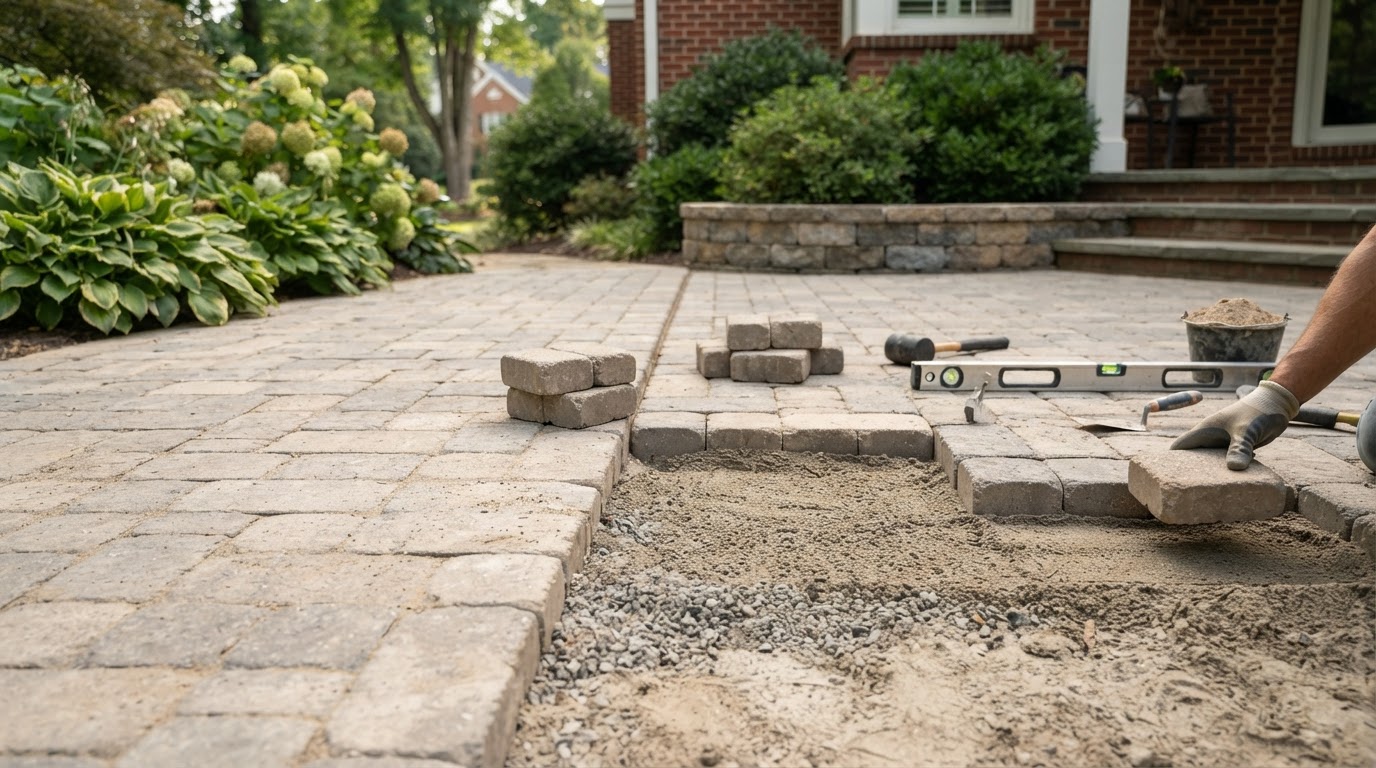
Paver repair and restoration in Hampton, VA evaluates and restores an existing paver surface that has settled, shifted, or worn. Because pavers are modular, a damaged section can often be lifted and reset rather than replaced wholesale, which is the main advantage of pavers over a poured surface. Request an Estimate to describe the condition, or call 757-801-3219 to discuss it.
Discuss Your Paver Repair
Describe the condition of your patio, walkway, or driveway and what you are seeing.
Project Needs & Repair Fit
Common Visible Concerns
Homeowners call for paver repair when they notice uneven surfaces, localized settlement, shifting edges, or joint deterioration. A patio that dips under a table leg, a walkway edge that has pulled away, or joints that have lost their sand are the kinds of concerns that prompt a repair conversation. The visible problem is usually clear; the cause often is not.
Cosmetic vs. Base-Related Problems
Distinguishing cleaning needs from structural or base-related problems is the first step. A stained or mossy surface may need cleaning and sealing, while a sunken or shifting surface points to the base, the edge, or drainage. Cosmetic cleaning, joint and edge maintenance, surface resetting, base-related repairs, drainage changes, and replacement when needed are different levels of intervention, and the right one depends on what the assessment finds. Treating a base problem with a cleaning wastes effort; treating a cosmetic issue with excavation wastes money.
What Should Be Assessed First
Before choosing a repair, it helps to assess the extent of the movement, the condition of the base, the edge restraint, the joints, and any drainage or root involvement. Deciding between localized repair and broader reconstruction depends on whether the problem is isolated or systemic. Reusing suitable existing pavers is often possible, and matching replacement materials when available keeps the repair invisible where it matters.
Assessing, Resetting & Matching
Reusing Existing Pavers
Reusing suitable existing pavers is one of the advantages of a modular surface. Pavers that are intact can be lifted, the base beneath them corrected, and the same units reset, which keeps cost down and preserves the original look. Pavers that are cracked or broken are flagged for replacement.
Matching Replacement Materials
Matching replacement materials when available keeps a repair from standing out. Exact matches depend on whether the original paver is still manufactured and in stock, and a close-but-not-exact match may be the realistic outcome. In that case, a contrasting border or a strategic placement of the new units can integrate the repair. This is an honest discussion of tradeoffs, not a promise of an invisible match.
Localized Repair vs. Reconstruction
The choice between localized repair and broader reconstruction depends on the cause. An isolated settlement from a single base defect may need only a small section lifted and reset, while widespread settlement, failed edges, or drainage problems may point to broader reconstruction. Reusing pavers reduces the scope of reconstruction, but the underlying cause must be addressed or the problem returns. These decisions follow the assessment, not a fixed rule.
Assessing & Repairing a Paver Surface
Diagnosis Before Repair
Repair begins with diagnosis before any paver is lifted. The extent and pattern of movement, the base, the edge, the joints, and any drainage or root involvement are reviewed so the repair targets the cause. A repair that resets pavers without addressing a failed base or a drainage issue is temporary at best.
Lifting, Resetting & Jointing
Lifting, resetting, and jointing follow. The affected pavers are lifted, the base is corrected, recompacted, or rebuilt as the diagnosis requires, the pavers are reset to the original grade, and joints are refilled and stabilized. Edge restraint is repaired or replaced where it has failed. This sequence is lighter than a full installation because it targets the affected area, but it follows the same structural logic.
Addressing the Underlying Cause
Addressing the underlying cause is what separates a lasting repair from a recurring one. If the cause is a drainage issue, the drainage is corrected; if it is a root, the root is managed; if it is a failed base, the base is rebuilt. The closing step is reviewing the reset surface, its slope and edges, and care guidance. Because each repair is driven by its specific cause, the process adapts to the surface and the problem.
Cost Factors, Related Services & Hampton Coverage
What Affects a Paver Repair Estimate
Estimates reflect the area affected, the extent of base or drainage work needed, whether pavers can be reused or must be replaced, access, and the cause of the movement. A small localized reset and a broad reconstruction with drainage correction carry very different estimates. Matching replacement pavers, when needed, also factors in.
Related Services & Local Coverage
Related completed services include Paver Cleaning & Sealing, Yard Drainage & French Drain Installation, and Paver Patio Installation. We serve Hampton and the surrounding communities shown on our service-areas overview. For an estimate matched to your surface's condition, Request an Estimate or call 757-801-3219.
Paver Repair Questions
These questions come up often when Hampton homeowners consider paver repair.
Related Services
Discuss Your Paver Repair & Restoration Project
Tell us about your property and your goals, and we will help plan the right approach for your Hampton outdoor space.