
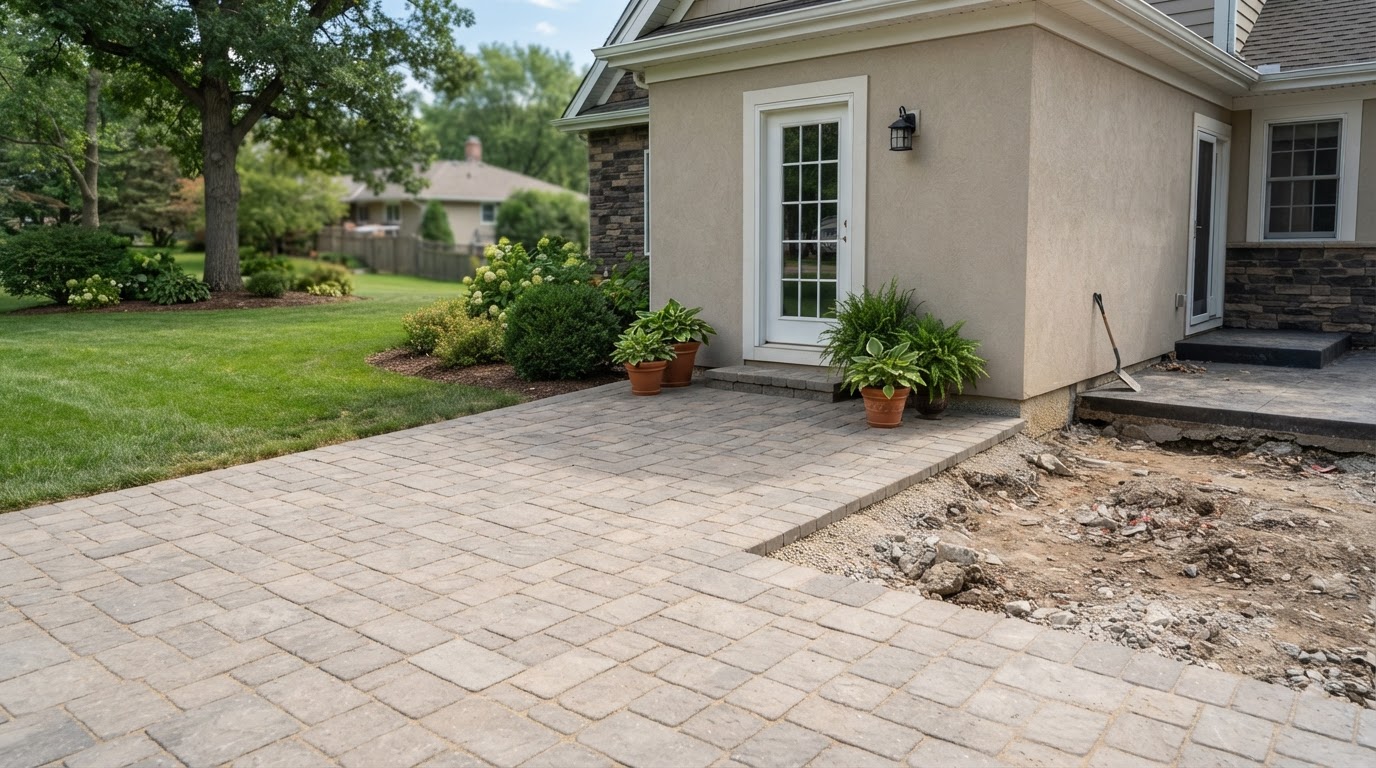
Concrete Patio Removal & Paver Replacement in Hampton, VA
Concrete patio removal and paver replacement in Hampton, VA takes an existing concrete slab out and installs a new paver surface in its place. A cracked, settled, or unsightly slab is a common starting point; the goal is a surface that looks intentional, drains well, and can be repaired in sections rather than replaced wholesale. Request an Estimate to describe your slab, or call 757-801-3219 to discuss it.
Discuss Your Concrete Replacement
Tell us about the existing slab and the paver surface you want in its place.
Project Goals & When This Service Fits
Why Homeowners Replace a Concrete Slab
Homeowners replace a concrete slab for a few recurring reasons. The slab has cracked or settled and looks unsightly, water ponds on it because it slopes wrong, the surface is plain and uninviting, or the space no longer suits how the yard is used. A paver surface offers a more attractive, repairable alternative that a solid slab cannot match, and the replacement is a chance to correct drainage and layout at the same time.
Existing Slab Condition & Access
Existing slab condition and access shape the project. A slab that is cracked but stable may allow different choices than one that has settled or heaved. Access for removal equipment, the distance to dispose of the broken concrete, overhead clearance, and proximity to doors and structures all affect how the work proceeds. These are assessed before the scope is set, because they influence both feasibility and estimate.
Reuse Footprint or Change the Layout
A key decision is whether to reuse the existing footprint or change the layout. Keeping the same shape simplifies the project and limits disruption to surrounding landscape, while changing the shape or size lets the new patio better suit the yard's use and circulation. Either choice is valid; the decision is made as part of planning so the new surface fits the property rather than simply copying the old slab.
Removal, Base & Material Options
Removing the Slab & Preparing the Base
Removing the slab involves breaking up the concrete, hauling away the debris, and preparing the area for the new base. The existing subgrade is assessed and corrected as needed, because the base beneath a paver surface is what gives it stability. Installing pavers directly over a slab, where conditions allow, still requires evaluating drainage and elevation; where the slab is unsuitable, full removal and a new base are the right approach.
Finished Elevations & Drainage
Finished elevations and drainage are planned as part of the replacement. The new paver surface must meet doors, steps, and adjoining surfaces at the right height, and the slope must move water away from the home and toward an appropriate outlet. A replacement is an opportunity to correct a slab that sloped wrong or trapped water, so drainage is built into the new base rather than carried over from the old surface.
Material & Pattern Selection
Material and pattern selection follows the same considerations as any paver patio. Concrete pavers, brick, or natural stone each offer different looks and performance, and patterns and borders define the surface. The choices are made to suit the home, the use, and the surrounding landscape. Because the new surface is a fresh start, the design can complement the property rather than being constrained by what the slab looked like.
Planning & Replacement Process
Assessment & Layout Decisions
The process starts with assessing the existing slab, the access, and the surrounding conditions, then deciding the new layout. The footprint may be reused or changed, the finished elevation is planned against doors and steps, and drainage is designed into the new surface. These decisions are made before any demolition so the replacement proceeds on a clear plan.
Removal, Excavation & Base
Removal breaks up and hauls the concrete, then excavation prepares the area for the new base. The subgrade is compacted, a geotextile and aggregate base are installed to suit the patio's use, and the slope is established. Where the old slab sloped wrong or trapped water, the new base corrects it. This stage is what separates a lasting paver surface from one that simply sits on the old problem.
Installation & Transition Details
Installation lays the pavers in the chosen pattern, sets edges and restraints, fills and stabilizes joints, and compacts the surface. Transitions to doors, steps, and adjoining surfaces are detailed so they meet cleanly. The closing step reviews the finished surface, the slope, and care guidance. The sequence is a reasonable planning approach; the specifics adapt to the property, the access, and the weather.
Estimate Factors, Related Services & Coverage
What Affects a Removal & Replacement Estimate
Estimates reflect the slab size, the difficulty of removal and disposal, access for equipment, the new layout, the paver material and pattern, base preparation, and any drainage or elevation corrections. Reusing the footprint and changing the shape carry different scopes, and a slab that requires heavy breaking versus one that lifts easily affects the removal portion. Transitions to doors and steps also factor in.
Related Services & Hampton Service Area
This is a specialty under Paver Patio Installation, which covers new patio planning. Related specialty services include Paver Patio Extensions & Additions, and related core services include Hardscape Design & Installation and Patio Drainage & Standing Water Repair. We serve Hampton and the surrounding communities listed on our service-areas overview. For an estimate matched to your slab and goals, Request an Estimate or call 757-801-3219.
Concrete Removal & Replacement Questions
These questions come up often when Hampton homeowners consider replacing a concrete slab with pavers.
Related Services
Discuss Your Concrete Patio Removal & Paver Replacement Project
Tell us about your property and your goals, and we will help plan the right approach for your Hampton outdoor space.