
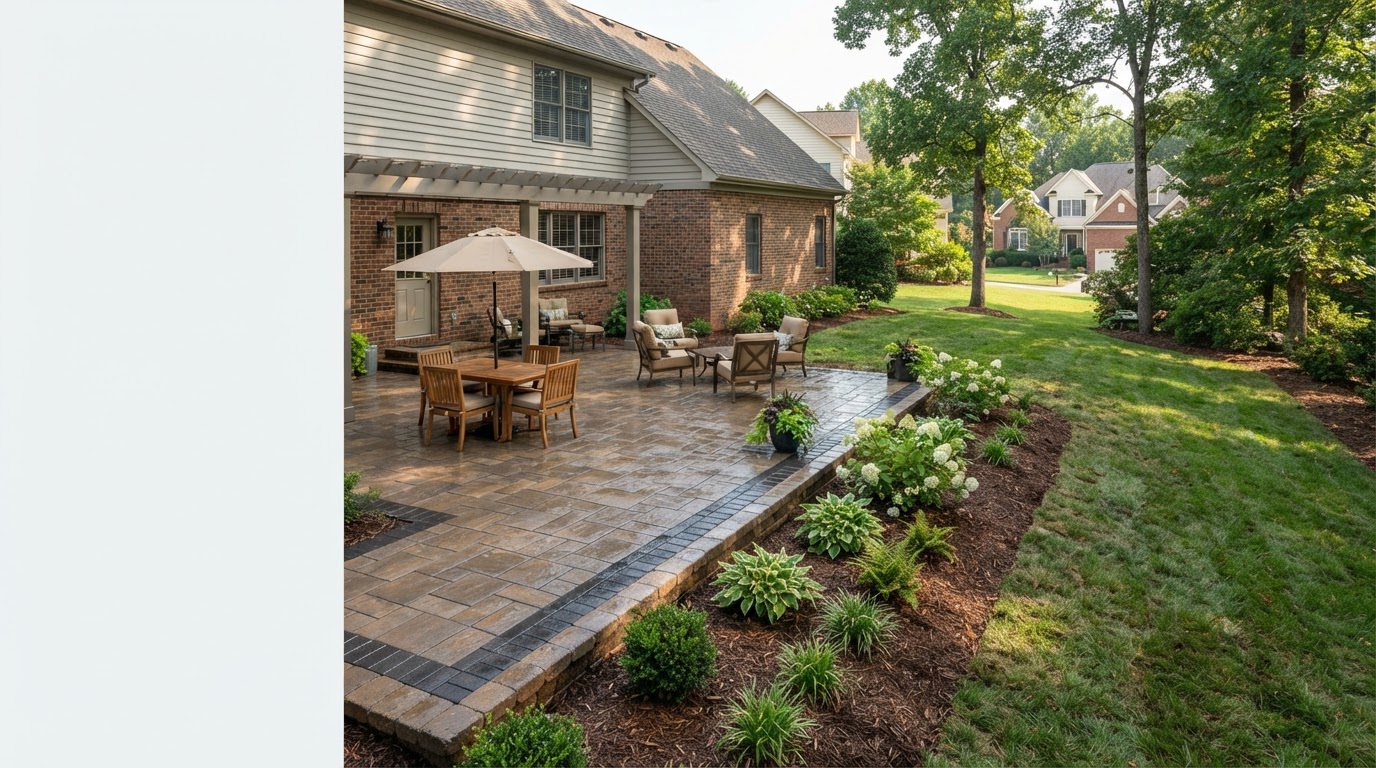
Yard Grading & Landscape Leveling in Hampton, VA
Yard grading and landscape leveling in Hampton, VA adjusts yard elevations to support appropriate drainage and the planned use of the space. Grading is the foundation of how a yard performs: water moves across the ground, and if the ground is shaped wrong, no planting or paving will fix the result. Request an Estimate to describe your yard, or call 757-801-3219 to discuss it.
Discuss Your Grading Project
Tell us about the uneven ground, standing water, or the use you want for the space.
Project Needs & Grading Fit
Uneven Ground & Project Preparation
Homeowners consider grading when the ground is uneven, when a low spot collects water, when a slope makes part of the yard unusable, or when a new patio, lawn, or planting area needs a properly shaped base. The goal is ground that drains appropriately and provides a suitable base for whatever comes next.
Surface Smoothing vs. Grade Changes
The difference between surface smoothing and broader grade changes is important. Surface smoothing fixes minor unevenness and bumps; broader grade changes reshape how water moves across the yard, such as re-establishing a slope away from the home or eliminating a low spot. The two are different scopes, and the right one depends on whether the issue is cosmetic unevenness or a drainage and elevation problem.
What Should Be Assessed First
Before changing yard elevations, it helps to assess the current slope, where water moves and collects, the existing vegetation, utilities, and adjacent property, and how the yard connects to patios, paths, and walls. Soil handling and landscape restoration are part of the plan, because grading disturbs the ground and the planting on it. The assessment identifies what the grading must accomplish before any earth is moved.
Water Movement, Transitions & Coordination
Slope, Water Movement & Transitions
Water movement and transitions to existing features are the heart of grading. The yard is shaped so water moves away from the home and toward an appropriate path or outlet, and transitions to patios, paths, walls, and the property line are detailed so the graded ground meets them cleanly. A grade that dumps water onto a patio or a neighbor's lot has not solved the problem.
Access, Vegetation & Utilities
Access, existing vegetation, and utilities constrain what grading can do. Equipment access, mature trees and planting that should be preserved, underground utilities, and adjacent property all shape the scope. Some yards can be regraded broadly; others require careful work around features that must stay. These constraints are part of the assessment, not obstacles discovered mid-project.
Soil Handling & Landscape Restoration
Soil handling and landscape restoration are part of any grading project. Grading moves soil, and that soil has to be handled, amended where needed, and the disturbed area restored, whether to lawn or planting. A grading project that leaves a torn-up yard has only done half the work. Coordination with patios, paths, and walls ensures the graded ground provides a suitable base for the hardscape that follows or surrounds it.
Planning & Executing Grading
Assessment & Grade Plan
Grading begins with an assessment and a grade plan. The current slope, water movement, existing features, and the intended use are reviewed, and the target grades are set to move water appropriately and provide a suitable base. The plan identifies where soil will be cut, filled, and shaped before any equipment moves.
Excavation, Fill & Compaction
Excavation, fill, and compaction follow the plan. Soil is moved to establish the designed grades, fill is placed and compacted where the grade is raised, and the surface is shaped to the intended slopes. The work is sequenced so the yard moves from rough grade to finished grade in a controlled way, with drainage checked as the shape develops.
Slope Verification & Restoration
Slope verification and restoration complete the work. The finished grades are verified to move water as planned, the soil is prepared, and the disturbed area is restored to lawn or planting per the plan. The closing step is reviewing the graded yard, its drainage, and any care the new lawn or planting needs. The sequence adapts to the site, the scope, and the weather.
Cost Factors, Related Services & Hampton Coverage
What Affects a Grading Estimate
Estimates reflect the area and extent of the grading, whether it is surface smoothing or broader grade changes, the volume of soil moved, existing conditions, access, and landscape restoration. Coordination with patios, paths, or walls adds detail. A small smoothing and a full regrade with restoration carry very different estimates.
Related Services & Local Coverage
Related completed services include Yard Drainage & French Drain Installation, Retaining Wall Installation, Paver Patio Installation, and Landscape Design & Installation. We serve Hampton and the surrounding communities shown on our service-areas overview. For an estimate matched to your yard, Request an Estimate or call 757-801-3219.
Yard Grading Questions
These questions come up often when Hampton homeowners consider grading.
Related Services
Discuss Your Yard Grading & Landscape Leveling Project
Tell us about your property and your goals, and we will help plan the right approach for your Hampton outdoor space.