
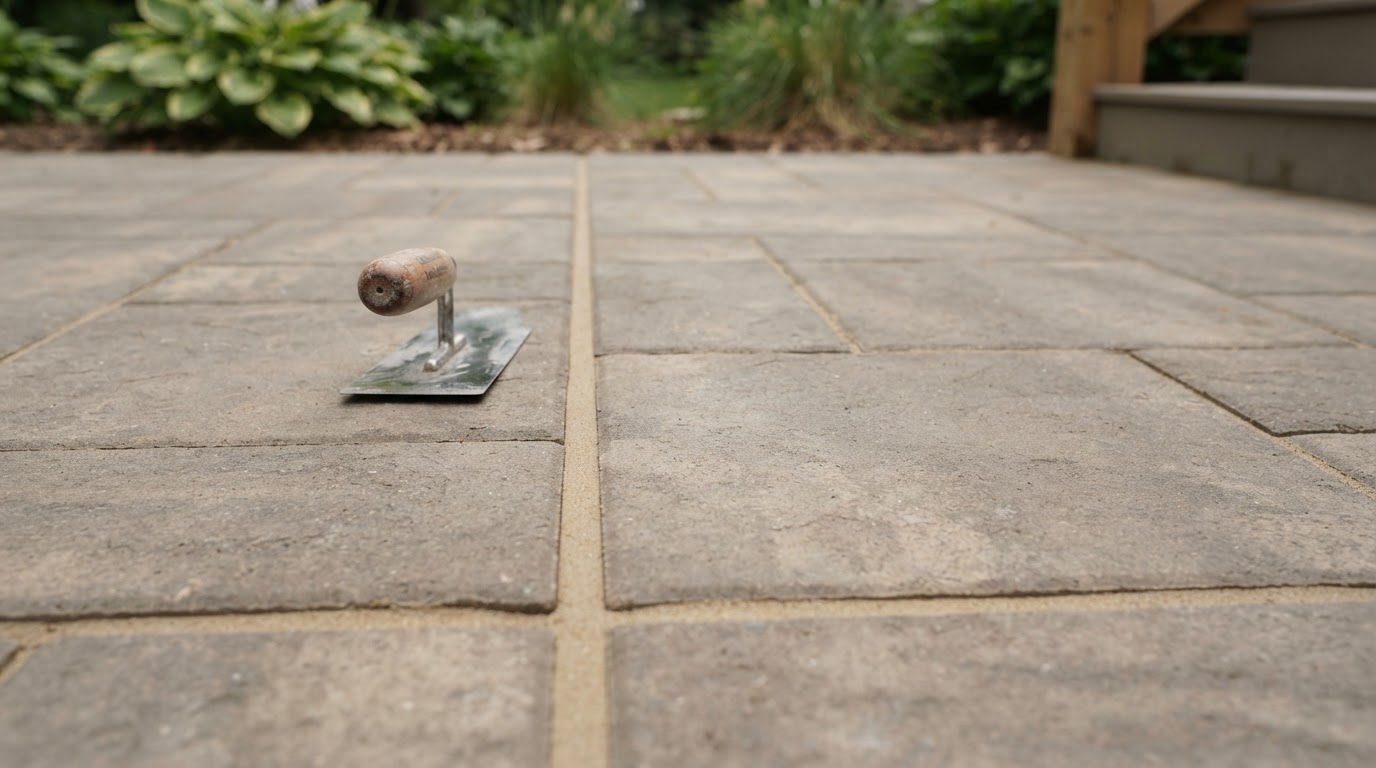
Polymeric Sand Replacement & Paver Joint Repair in Hampton, VA
Polymeric sand replacement and paver joint repair in Hampton, VA restores the material between paver units when joints have eroded, washed out, or deteriorated. Joints do real work: they help lock the surface in place, slow water and weed intrusion, and keep the pattern tight. When joint material is missing, the surface loosens and the gaps invite weeds and migration. Request an Estimate to describe your joint condition, or call 757-801-3219 to discuss it.
Discuss Your Paver Joint Repair
Tell us about the joint condition of your patio or walkway and we can help plan the right repair.
Signs, Goals & When This Repair Fits
What Homeowners Notice in the Joints
The visible signs are straightforward: joints that have opened wider than they should, sand washing out after heavy rain, weeds growing in the gaps, or a hazy residue left by deteriorated joint material. Some homeowners notice a paver that wiggles slightly because the surrounding joint material no longer holds it snug. These are signs the joints need attention, and they are distinct from signs that the base or edge has failed.
Joint Condition & Surface Movement
Joint condition and surface movement are related but separate. Eroded joints can let water reach the bedding layer, which over time can contribute to settlement, but loose or sunken pavers point to a base or edge problem first. New polymeric sand added over a surface that is moving will not stop the movement; the joints will simply open again as the pavers shift. That is why the surface is evaluated for stability before a joint repair is recommended.
When Joint Repair Is the Right Step
This service fits when the pavers themselves are well-aligned and stable but the joint material between them has degraded. It is often combined with cleaning, and sometimes with sealing, as part of a maintenance pass. If the surface is uneven or edges are spreading, joint repair is paired with the relevant reset or edge work rather than done in isolation. Joint material is also specific to the paving system, so permeable pavers and conventional pavers are not treated the same way.
Joint Repair Options & Material Choices
Conventional Versus Permeable Joints
Conventional paver systems typically use polymeric joint sand, which contains a binding agent that hardens after wetting to resist washout, weeds, and insect intrusion. Permeable paving systems use specialized joint aggregates with larger stone sizes designed to let water pass through, and they require a different joint material than conventional sand. Using the wrong product in a permeable system can clog the openings and defeat the system's purpose, so the joint material always matches the paving system.
Preparation & Product Compatibility
Preparation matters more than the product. Old, deteriorated, or contaminated joint material must be cleaned out to the correct depth before new material is installed; adding new sand over old debris leaves a poor bond and a surface that fails quickly. The joints are cleaned, dried, and refilled, and the surface is then wetted according to the manufacturer's requirements. Product compatibility, joint width, and the paver material all influence which jointing product is appropriate, and not every paver or stone surface suits polymeric sand.
Limits & What Joint Repair Cannot Do
Joint repair has real limits. It will not straighten sunken or shifting pavers, will not restore a failed edge restraint, and will not stop water that is flowing beneath the surface. It also does not permanently eliminate weeds; weed seeds can germinate in organic material that accumulates on top of even hardened joints. Honest expectations mean joint repair is recommended for what it can do, stabilizing joints between stable pavers, and not as a cure for structural problems it cannot address.
Assessment & Joint Repair Process
Evaluating the Surface & Joints
The process starts with evaluating the surface and the joints together. The pavers are checked for stability and alignment, the joints are inspected for depth and condition, and the paving system, conventional or permeable, is confirmed so the correct joint material is selected. If the surface is moving, that is flagged before any joint work begins.
Cleaning & Preparing the Joints
Cleaning and preparing the joints is the most important step. Deteriorated material and debris are removed to a consistent depth, the surface is cleaned, and the joints are dried as the product requires. Any damaged pavers identified during cleaning are noted for separate attention. Skipping this preparation is the most common reason a joint repair fails early, so it is not shortcut.
Refilling, Wetting & Follow-Up Care
Refilling installs the appropriate joint material, sweeping it into the joints and compacting so the material settles fully, then wetting it per the manufacturer's instructions. Excess material is removed from the surface to prevent hazing. The closing step covers care, including how long to keep the surface dry and what to expect as the joints cure. Follow-up maintenance is discussed honestly, including that joints may eventually need attention again depending on exposure and use.
Estimate Factors, Related Services & Coverage
What Affects a Joint Repair Estimate
Estimates reflect the area to be rejointed, the joint width and depth, the type of joint material appropriate to the paving system, the amount of cleaning and removal required, and whether the surface needs pressure washing beforehand. Permeable systems and conventional surfaces carry different product and preparation requirements. A small walkway and a large driveway involve very different scopes.
Related Services & Hampton Service Area
This is a specialty under Paver Repair & Restoration and overlaps with Paver Cleaning & Sealing, which often precedes or follows joint work. Related specialty services include Paver Edge Restraint Repair & Replacement and Sunken & Uneven Paver Repair when movement is present. We serve Hampton and the surrounding communities shown on our service-areas overview. For an estimate matched to your surface, Request an Estimate or call 757-801-3219.
Paver Joint Repair Questions
These questions come up often when Hampton homeowners notice eroded or weedy joints between their pavers.
Related Services
Discuss Your Polymeric Sand & Paver Joint Repair Project
Tell us about your property and your goals, and we will help plan the right approach for your Hampton outdoor space.