
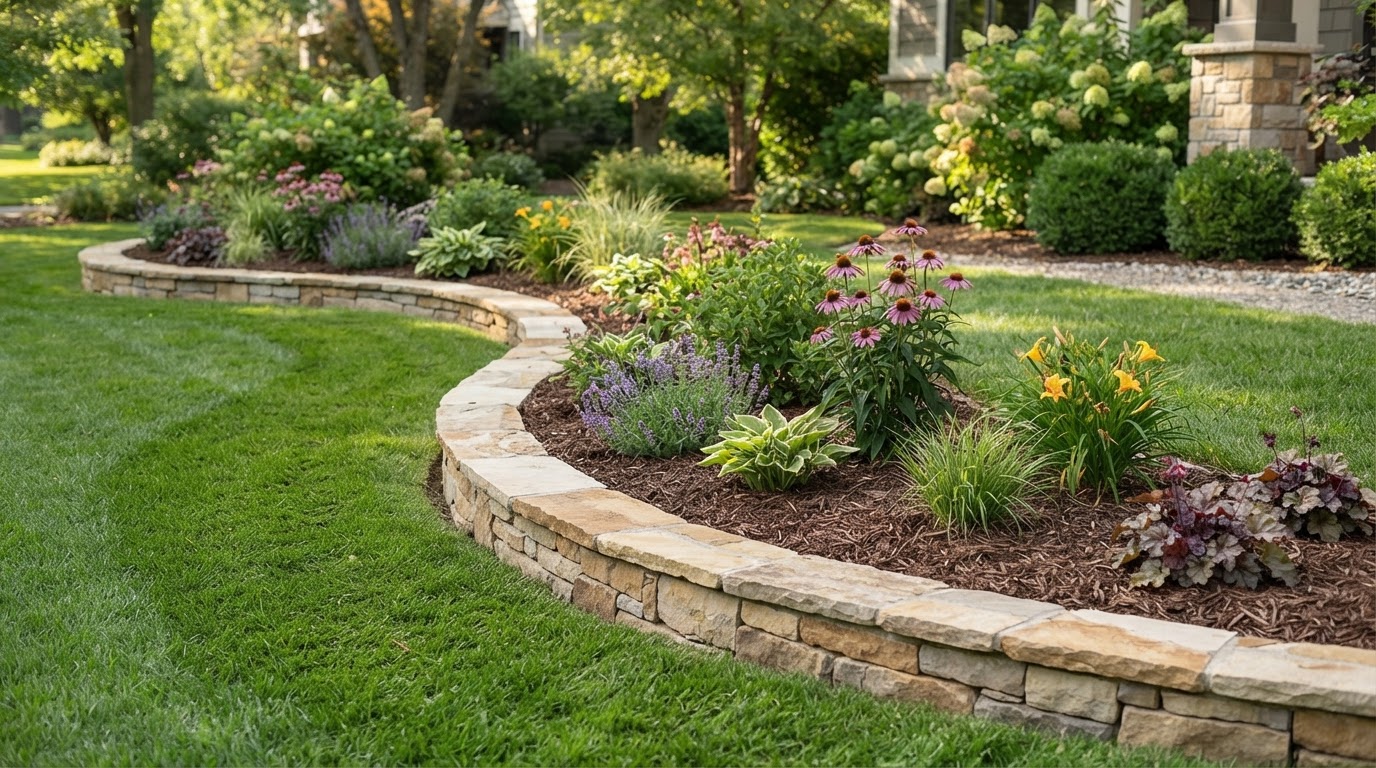
Landscape Edging & Stone Flower Bed Borders in Hampton, VA
Landscape edging and stone flower bed borders in Hampton, VA define planting beds and separate landscape materials with a crisp, permanent edge. A stone border keeps mulch in the bed, grass out, and creates a clean line that frames the planting and simplifies maintenance. Request an Estimate to describe your beds, or call 757-801-3219 to discuss it.
Discuss Your Landscape Edging
Tell us about your planting beds and the stone or edging borders you are considering.
Project Goals & When This Service Fits
Bed Layout & Material Separation
Bed layout and material separation are the core goals. A stone edge defines where a bed begins and ends, keeps mulch or soil from washing onto the lawn, and stops grass from creeping into the planting area. The same principle applies between a patio and a bed, or a path and a lawn. Clear edges make each area read as intentional and reduce the constant tidying that undefined borders require.
Stone & Other Edging Options
Stone and other edging options each suit different situations. Natural stone offers organic variation and a timeless look; precast concrete edging provides consistency; metal edging offers a clean, low-profile line; and timber suits a more rustic setting. The choice depends on the landscape style, the height needed, the budget, and what the edge meets. No single material is right for every bed, so the selection reflects the specific setting.
Curves, Corners & Connections
Curves, corners, and connections are part of the layout. A curved bed edge softens the landscape and follows a natural planting shape; a straight edge suits a formal design. Corners are detailed cleanly, and connections to lawns, paths, and patios are planned so the edging meets them without awkward gaps or trip edges. The edging ties the landscape together rather than chopping it into unrelated pieces.
Options, Materials & Scope
Edging Versus Retaining Structures
A key distinction is between decorative edging and retaining structures. Landscape edging defines a bed and separates materials; it is not a retaining wall and does not hold back significant soil. Where a bed has a real elevation change that must be held, a low retaining wall or garden wall is the appropriate solution, not edging. Using edging where a wall is needed leaves the soil unsupported, and using a wall where edging would do is overbuilt. The scope matches the actual condition.
Maintenance Access & Material Migration
Maintenance access and material migration are practical considerations. Edging that is too high can block a mower deck; edging that is too low may not contain the mulch. The edge height is set against the surrounding grade and the materials it separates. A well-planned edge reduces the migration of mulch onto lawns and gravel into beds, which cuts ongoing maintenance, but it does not permanently stop weeds, which can still seed into any bed from above.
Installation Approach by Material
The installation approach depends on the material. Stone edging may be set in a shallow trench on a compacted base, sometimes with a mortar footing for stability. Metal edging is staked into the ground. Precast edging may be set on a base or interlocked. Each method provides the stability the material needs so the edge stays in place over time. The method is chosen for the material and the setting, not applied universally.
Planning & Installation Process
Bed Layout & Material Selection
The process starts with laying out the bed lines and selecting the edging material. The bed shape is marked, whether curved or straight, the material is chosen to suit the landscape style and what the edge meets, and the height is set against the surrounding grade. Connections to lawns, paths, and patios are planned.
Trenching & Base Preparation
Trenching and base preparation create a stable edge. A trench is cut along the bed line to the depth the material requires, the base is compacted, and any footing or anchoring is prepared. For stone, this may include a leveling base or mortar footing; for metal or precast, stakes or a compacted bed. This stage is what keeps the edge from shifting or heaving over time.
Setting, Connections & Finishing
Setting, connections, and finishing install the edging along the line, detail the corners and transitions, and restore the surrounding lawn, mulch, or gravel. The closing step reviews the line, the height, and care guidance. The sequence adapts to the material and the landscape's existing conditions.
Estimate Factors, Related Services & Coverage
What Affects a Landscape Edging Estimate
Estimates reflect the length of edging, the material selected, the bed shape, the installation method, connections to lawns or paths, and restoration of surrounding materials. A straight precast edge and a curved natural-stone border with mortar footings carry different scopes. The height and what the edge meets also influence the approach.
Related Services & Hampton Service Area
This is a specialty under Landscape Design & Installation. Related specialty services include Stepping Stone & Garden Path Installation and Gravel Patio & Walkway Installation, and related core services include Seating Walls & Garden Wall Installation for real elevation changes. We serve Hampton and the surrounding communities shown on our service-areas overview. For an estimate matched to your beds, Request an Estimate or call 757-801-3219.
Landscape Edging Questions
These questions come up often when Hampton homeowners consider stone or edging borders for planting beds.
Related Services
Discuss Your Landscape Edging & Stone Bed Borders Project
Tell us about your property and your goals, and we will help plan the right approach for your Hampton outdoor space.