
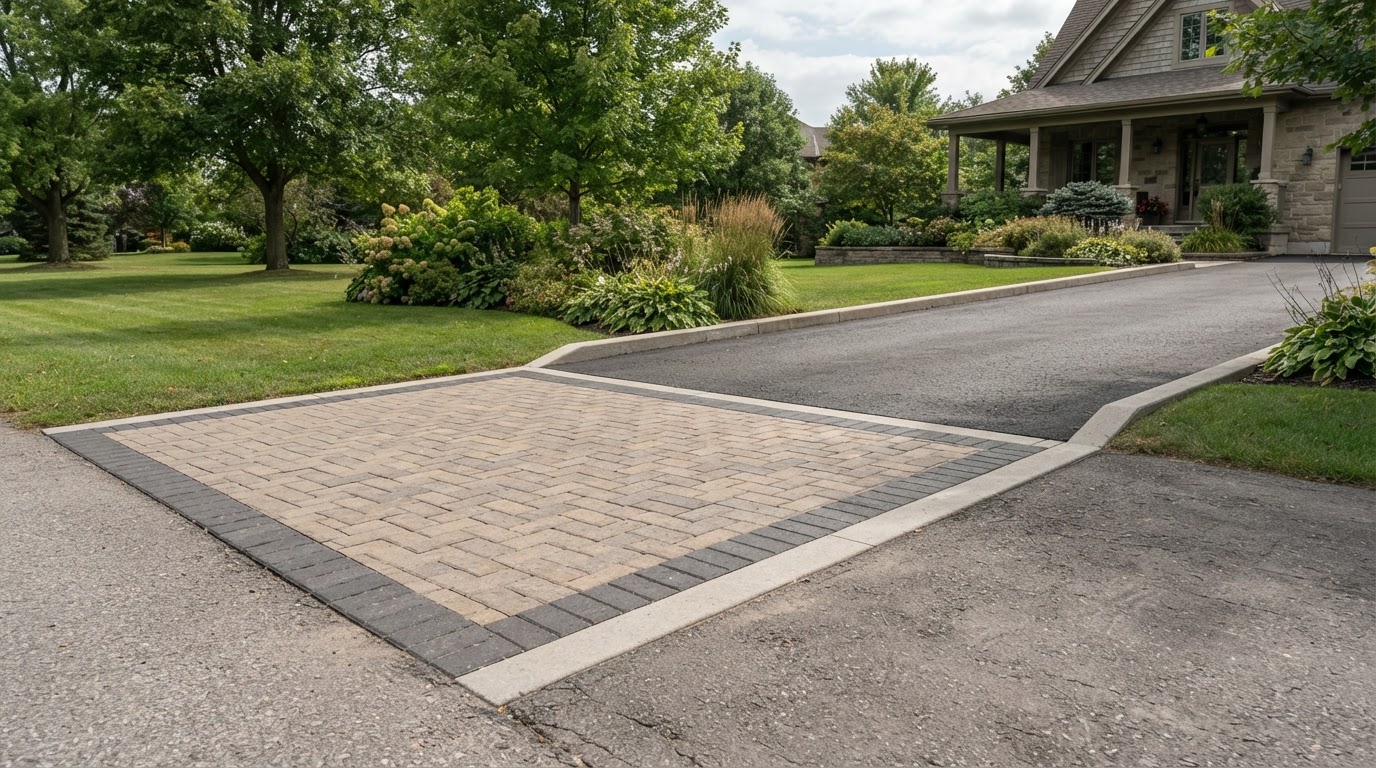
Driveway Apron & Paver Border Installation in Hampton, VA
Driveway apron and paver border installation in Hampton, VA adds a paver accent or a vehicle-bearing apron to a driveway, whether alongside existing concrete, asphalt, or pavers. A decorative border frames the drive and ties it to the home's walkway, while an apron at the entrance handles the transition from the street. Request an Estimate to describe your driveway, or call 757-801-3219 to discuss it.
Discuss Your Driveway Apron or Border
Tell us about your driveway and the paver accent or apron you are considering.
Project Goals & When This Service Fits
Decorative Borders Versus Vehicle Aprons
A decorative border runs along the edge of a driveway to frame it visually and connect it to the home's design. It carries little or no vehicle load, so its base and material requirements are lighter. A vehicle-bearing apron, typically at the street entrance, carries the full weight of vehicles turning and stopping, so it needs a base and paver suited to that load. The distinction is fundamental because a border built like an apron is overbuilt, while an apron built like a border will fail.
Connections to Existing Surfaces
Connections to existing surfaces shape the project. A paver border alongside concrete or asphalt must meet that surface cleanly at the right elevation, with an edge that holds the pavers in place against the adjoining material. An apron at the street must transition to the existing drive on one side and the street on the other. These connections are planned so there are no trip edges or mismatched seams, and so water still moves correctly across the transitions.
Load & Edge Conditions
Load and edge conditions are assessed before the scope is set. An apron that vehicles drive over needs a deeper base and a paver rated for vehicular use, with edge restraint strong enough to hold under turning loads. A border along the side needs stable edging but not the same base depth. The existing driveway's condition, the slope toward the street, and any drainage along the edge all factor in, because a paver addition that ignores them can create water or alignment problems.
Options, Materials & Scope
Apron Versus Border Preparation
Preparation differs sharply between an apron and a border. An apron is excavated to a vehicle-rated base depth, compacted, and built with a paver and edge restraint suited to vehicular loads. A border is prepared to a lighter pedestrian or edge standard. Using the wrong preparation for the application is the most common reason a paver apron fails, so the base always matches the load it will carry.
Surface Elevations & Drainage
Surface elevations and drainage are planned across the transitions. The paver area must meet the existing drive and the street at the right height, and the slope must continue to move water appropriately, whether toward the street, a drain, or a permeable area. An apron or border that changes the elevation or traps water creates new problems, so drainage is part of the layout from the start.
Right-of-Way Considerations
Where work is near the street, public right-of-way or driveway-access requirements may apply. An apron at the property line or street connection can be subject to municipal review, sight-line rules, or standards for the connection to the public way. Those requirements depend on the locality and the specific location of the work, so projects near the street are reviewed case by case rather than assumed to proceed without checking. Work entirely on private property is handled differently.
Planning & Installation Process
Assessment & Layout
The process starts with assessing the driveway, the intended paver area, and the connections to existing surfaces and the street. The border or apron layout is marked, the load requirements are confirmed, and any right-of-way considerations are identified. The material and pattern are chosen to match the home and walkway design.
Base & Edge Preparation
Base and edge preparation follows the load the paver area will carry. An apron is excavated and compacted to a vehicle-rated depth with appropriate edge restraint; a border is prepared to a lighter standard. The transitions to the existing drive and street are planned at the correct elevation, and drainage is built into the layout. This stage is what makes the paver area hold up under its intended use.
Installation & Transitions
Installation lays the pavers in the chosen pattern, sets the edges and restraints, fills and stabilizes joints, and compacts the surface. Transitions to concrete, asphalt, the street, or a walkway are detailed so they meet cleanly. The closing step reviews the alignment, the drainage, and care guidance. The sequence adapts to the driveway's condition and any right-of-way review required.
Estimate Factors, Related Services & Coverage
What Affects an Apron or Border Estimate
Estimates reflect the length and type of paver area, whether it is a decorative border or a vehicle-bearing apron, the base depth required, the paver material, connections to existing surfaces, and any drainage or right-of-way considerations. A simple side border and a street-entrance apron with vehicle-rated base carry very different scopes. What the paver area meets also influences the method.
Related Services & Hampton Service Area
This is a specialty under Paver Driveway Installation, which covers full driveway projects. Related specialty services include Front Entry Pavers & Porch Landing Installation, and related core services include Paver Walkway & Sidewalk Installation and Paver Installation. We serve Hampton and the surrounding communities listed on our service-areas overview. For an estimate matched to your driveway, Request an Estimate or call 757-801-3219.
Driveway Apron & Border Questions
These questions come up often when Hampton homeowners consider a paver apron or border for their driveway.
Related Services
Discuss Your Driveway Apron & Paver Border Project
Tell us about your property and your goals, and we will help plan the right approach for your Hampton outdoor space.